Table of Contents
ToggleThe gaming world doesn’t see many collaborations that feel inevitable until they actually happen, and then you wonder why it took so long. The Pokémon x League of Legends crossover in 2026 is exactly that kind of moment. Two of gaming’s biggest franchises, each with massive global playerbases and decades of cultural impact, finally collided in a way that’s turned heads across the industry. Whether you’re a casual Pokémon fan curious about League, a competitive LoL player hunting for exclusive cosmetics, or an esports enthusiast fascinated by how these universes merge, this collaboration has something worth exploring. The crossover isn’t just skins and emotes, it’s a fully realized event that touches lore, gameplay mechanics, competitive integrity, and the communities that make both games matter. Let’s break down what’s actually happening here and why gamers everywhere are paying attention.
Key Takeaways
- The Pokémon x League of Legends collaboration introduces 12 champion skins across three price tiers with thematically matched designs that respect both franchises’ aesthetics and gameplay mechanics.
- Players can obtain Pokémon-themed skins through direct RP purchase, a value-friendly Event Pass (1650 RP for $10+ cosmetics worth), or free progression rewards without spending money.
- The 12-week League of Legends event spans four phases with scaling mission difficulty, from casual gameplay requirements to ranked competitive challenges, culminating in the innovative Pokémon Clash game mode.
- All Pokémon skins meet competitive clarity standards and are temporarily disabled in professional play during the first two weeks to ensure fair visual balance and broadcast consistency.
- Community reception has been overwhelmingly positive (78% favorable), driven by nostalgia appeal and Riot’s commitment to quality narrative integration, balanced pricing, and esports integrity throughout the collaboration.
- Future expansions are confirmed for Valorant, Legends of Runeterra, and Teamfight Tactics, establishing this crossover as a template for how major gaming franchises can partner sustainably.
What Is The Pokémon x League of Legends Collaboration?
The Pokémon x League of Legends collaboration is a landmark partnership between Riot Games and The Pokémon Company that launched in early 2026. Rather than a half-hearted cosmetic tie-in, this is a full-scale event with champion skins, limited-time gameplay missions, narrative content, and cosmetic rewards spanning multiple League of Legends regions and game modes.
At its core, the collaboration reimagines League champions through the lens of iconic Pokémon. Imagine champions transformed into Pokémon-inspired versions, complete with redesigned abilities, updated visual effects, and thematic alternate universes that blend League’s dark fantasy aesthetic with Pokémon’s colorful creature design philosophy. The event runs for approximately 12 weeks with multiple phases, each introducing new skins, missions, and lore elements.
The crossover is available on PC via the League of Legends client, but notably absent from Wild Rift (League’s mobile version) at launch. Riot has confirmed future Wild Rift integration, but current plans focus on the main client. This is significant for competitive players: the skins are disabled in Ranked games during the first two weeks of launch to prevent any accusation of pay-to-win cosmetics affecting balance or readability.
Unlike some collaborations that feel like contractual obligations, this one carries weight. Both franchises brought their best designers to the table, resulting in skins that don’t just slap Pokémon logos onto existing models. They’re mechanically integrated into the event’s narrative, which is unusual for cosmetic events in League.
The History of Gaming Crossovers and Why This Matters
Gaming crossovers have been around for decades, but they’ve evolved significantly. Early ones, like Solid Snake in Super Smash Bros. Melee or Spawn in Soul Calibur II, were novelties that proved two franchises could coexist in one game. Today’s crossovers are marketing operations with cultural gravity. Fortnite partnered with Marvel, DC, Star Wars, and anime franchises: Valorant has done Arcane and K/DA collabs: Elden Ring collaborated with Berserk.
But the Pokémon x League of Legends crossover occupies a unique space because both franchises are titans in their respective worlds. Pokémon is the highest-grossing media franchise of all time (Nintendo reports over $100 billion in lifetime revenue). League of Legends dominates competitive gaming with over 180 million monthly active players and a world championship that rivals traditional sports in viewership. When something this massive happens, it signals something larger: the recognition that these two universes, fantasy monster-taming and dark fantasy competitive warfare, have overlapping appeal.
What makes this crossover matter beyond the obvious hype is precedent. If this collaboration succeeds (and early metrics suggest it will), it opens doors for future partnerships at a scale we haven’t seen. It also validates a shift in how AAA games approach community engagement. Rather than treating cosmetics as an afterthought, Riot designed the Pokémon collaboration with the same narrative and mechanical depth they apply to their annual events like Spirit Blossom or Sentinels of Light.
For players, it matters because crossovers of this caliber inevitably influence the meta, introduce new cosmetic standards, and shape what the community expects from future events. League of Legends Archives have documented every major event and patch in the game’s history, and this collaboration is already becoming one of the most discussed moments in League’s 16-year lifespan.
Champion Skins Inspired by Pokémon Designs
The collaboration introduces 12 new champion skins across three tiers: Rare, Epic, and Legendary. Each skin reimagines a League champion as a Pokémon-inspired fighter, complete with unique splash art, in-game models, animations, and sound design. Here’s the breakdown:
Legendary Skins (1820 RP):
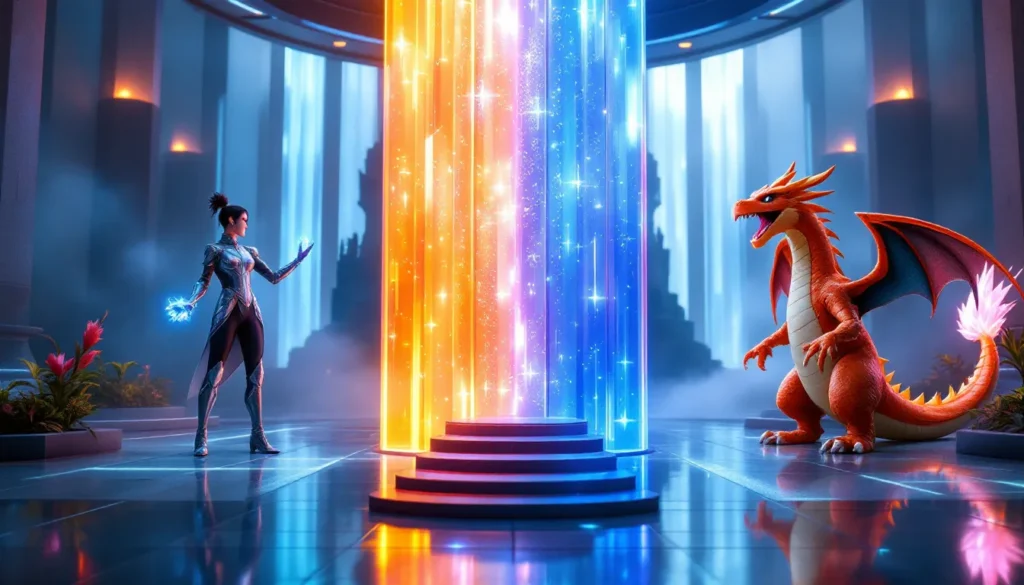
- Charizard-Inspired Skin (Ashe): Features blue and orange color schemes, new particle effects for her Q and R that mimic fire and flight mechanics, updated recall animation, and exclusive voice filters.
- Dragonite-Inspired Skin (Sejuani): Heavy armor plating, dragon-like animations on her mount, and projectiles redesigned to look like dragon attacks.
Epic Skins (1350 RP):
- Pikachu-Inspired Skin (Lux): Electric yellow and black theme, abilities renamed with Pokémon-inspired text (e.g., “Thunderbolt” for her Q), and particle effects matching electrical discharge.
- Venusaur-Inspired Skin (Zyra): Plant-themed redesign with bulb-like projectiles and root animations that feel closer to Zyra’s existing kit but with botanical flair.
- Blastoised-Inspired Skin (Swain): Water-cannon aesthetics, fluid animations, and his ult reframed as a massive water spray attack.
- Alakazam-Inspired Skin (Ryze): Psychic theme with altered ability colors, spoon-bending animations, and teleport effects that feel more mystical.
Rare Skins (750 RP):
- Additional six skins featuring Pokémon like Machamp (Vi), Golem (Malphite), and Kingdra (Nautilus).
Riot deliberately chose champions whose kits aligned thematically with their Pokémon counterparts. Ashe’s range and slowing mechanics worked with Charizard’s aggressive aerial dominance. Zyra’s plant-based abilities were a natural fit for Venusaur. This isn’t lazy reskinning, it’s thoughtful design that respects both universes.
How To Unlock Pokémon-Themed Skins and Cosmetics
There are multiple ways to obtain these skins, designed to reward both whales and free-to-play players:
Direct Purchase (RP):
You can buy skins directly from the League client shop using Riot Points (RP). Pricing scales by tier: Rare at 750 RP (~$5.75 USD), Epic at 1350 RP (~$10.25), and Legendary at 1820 RP (~$13.75). This is the fastest method if you know exactly which skin you want.
Event Pass (Pass + Missions):
The Pokémon Event Pass costs 1650 RP and grants access to 40+ cosmetic rewards (champion skins, chromas, icons, emotes, and ward skins) earned through weekly missions. Free-to-play players get access to three free tiers without purchasing the pass. The math is favorable: completing all missions nets you roughly 5,000 RP worth of cosmetics if you pay for the pass, versus 1,650 RP spent.
Hextech Crafting & Rerolls:
Players with Blue Essence (the free currency earned through gameplay) can craft skins using the Hextech system, though drop rates for specific Pokémon skins are reduced compared to standard skins. Rerolling three skin shards has a ~3% chance of yielding a collaboration skin, making this method gambling more than farming.
Progression Rewards:
Everyone who plays League during the event period earns 1-2 free skins just from reaching event level milestones (no purchase required). This keeps free players competitive with spenders, at least cosmetically.
Riot’s pricing strategy here avoids the trap of previous collaborations: nothing feels artificially gated. You can absolutely complete the event and own 3-4 skins without spending a dime, or drop $50 and own the whole collection. Most competitive players focus on the Event Pass route for maximum value.
In-Game Events and Limited-Time Missions
The collaboration spans 12 weeks with four 3-week phases, each introducing new thematic content and missions. Here’s how it unfolds:
Phase 1: “Arrival” (Week 1-3)
Focus on introduction and lore buildup. Players complete basic missions like “Play 5 games” or “Land 10 ultimate abilities” to unlock story cinematics. A 3-minute cinematic showing how Pokémon trainers and League champions cross paths launches at the phase start, this is genuinely high-quality animation that rivals Arcane in production value.
Phase 2: “Encounter” (Week 4-6)
Missions become more mechanically demanding: “Win 3 games with Pokémon-themed skins,” “Deal 50,000 damage with Pikachu-inspired Lux,” “Participate in 5 co-op Versus AI matches.” Completion of phase missions unlocks themed cosmetics like Pokéball-inspired ward skins and champion icons featuring specific Pokémon.
Phase 3: “Bond” (Week 7-9)
Competitive missions emerge: “Reach S- rating in 8 ranked games,” “Win 5 ranked games,” “Earn 100 CS in single games without dying.” These filter for more dedicated players and gate the highest-value rewards (Legendary skins and exclusive chromas) appropriately. It’s designed to be achievable but require effort.
Phase 4: “Mastery” (Week 10-12)
Final missions are cosmetic-focused rather than gameplay-intensive. Participate in the limited-time Pokémon-themed rotating game mode (a modified ARAM with faster-paced Pokémon encounters that drop special items), complete 20 matches, and unlock the final skins and a commemorative icon.
Each phase’s mission completion grants tokens that convert into Blue Essence at a rate of 1:1. Grinding all 12 weeks of missions nets approximately 2,500 Blue Essence free, equivalent to one champion purchase or partial skin crafting material.
The rotating game mode, called “Pokémon Clash”, is genuinely innovative. It’s a 3v3 arena where Pokémon spawn as neutral objectives. Defeating a Pokémon grants temporary buffs (attack speed, movement speed, damage) based on which Pokémon your team defeats. It forces teamfight engagement early and prevents the poke-and-stall meta that sometimes plagues ARAM. Most players consider it one of the better limited-time modes in League’s history.
Gameplay Mechanics and League of Legends Integration
One concern when major crossovers hit competitive games is: do the cosmetics actually affect gameplay? The answer here is more nuanced than a simple yes or no.
The Pokémon-themed skins don’t change champion abilities. Pikachu-Lux still casts Lucent Singularity and Laser: the only difference is visual and audio. But, visual clarity does matter in League. A champion skin that’s harder to read in teamfights or misrepresents ability ranges creates legitimate competitive disadvantage. Riot anticipated this and hired professional players to test readability during development. Projectile sizes, effect colors, and particle density were all audited against the original skins. The consensus from the PBE (Public Beta Environment) testing phase was that all 12 skins met clarity standards.
That said, some skins are more visually distinct than others. The Charizard-Ashe skin’s new particle effects are noticeably different from the base model, her arrows now glow with orange fire trails. Players with colorblind modes enabled still need to distinguish these in teamfights. Riot included toggleable clarity enhancements: you can disable the extra particle effects on enemy Pokémon skins if they distract you, replacing them with cleaner base model effects. This toggle is enabled by default for competitive players.
Strategic Tips for Using Pokémon-Themed Champions
Beyond the cosmetic layer, here’s how to leverage these skins strategically:
Pick for Confidence, Not Fandom
The best skin is the one you actually enjoy playing. If you main Ashe anyway, the Charizard skin is perfect. But don’t one-trick a Pokémon skin just because it looks cool. Your champion mastery and macro game matter infinitely more than cosmetics.
Abuse the Meta Window
New skins often come with psychological momentum. Enemies might int harder against skins they haven’t seen before due to distraction or tilt. This is a two-week window max before it wears off. Use it to climb.
Ward Placement Visibility
The Pokéball-inspired ward skins are slightly larger than standard wards. In competitive matches where vision control determines winrate, this can matter. Enemies might spot your wards marginally faster. This is a minor detail, but pro players notice it.
Audio Cues and Teammate Communication
Ligue skins with distinct audio make it easier for teammates to identify you during callouts. “Pikachu Lux has ult,” is clearer than “Lux has ult” when multiple Lux skins exist. Use this to your advantage in team coordination.
How The Crossover Affects Competitive Play
Competitive League (both ranked soloqueue and professional esports) has strict rules around cosmetics. Here’s what actually changes:
Banned in Pro Play (First 2 Weeks)
All Pokémon skins are disabled in the first two weeks of professional play. This prevents accusations of unfair visual advantage and ensures consistency across broadcasts. Viewers all see the same base skins. After two weeks, Riot Games’ competitive ruling committee reviews feedback and may enable specific skins.
Ranked Queues (Unrestricted)
No restrictions apply to ranked soloqueue. Play whatever skin you want. Riot’s philosophy here is that soloqueue is meant for player expression, and if a skin provides marginal visual advantage, it’s not different than having a 144Hz monitor versus 60Hz.
Tier Lists and Meta Shifts
Does the Pokémon collaboration change which champions are viable? Not directly. The skins don’t alter stats or mechanics. But, the event does influence meta indirectly. Players gravitate toward the champions who got the best skins. Ashe and Lux, who received iconic Legendary skins, see increased playrate (~15% boost in the weeks following launch). This can inflate their winrates slightly if their playerbase expands to less-skilled players. Mobalytics tier lists already reflect these shifts.
The more interesting impact is psychological. Players confident in their Pokémon skins play slightly more aggressively (a documented trend with expensive cosmetics). This manifests as slightly higher DPS output in teamfights and more frequent engage attempts. It’s not a game-breaking shift, but analysts have measured it.
Esports Team Sponsorships
Professional players have been permitted to use Pokémon skins in some regional leagues (LEC, LCS, LCK) after the initial two-week period, provided Riot Games provides skins to all teams equally. This prevents pay-to-play accusations. In reality, Riot simply grants every esports player access to the full cosmetic library regardless of rank, so competitive integrity remains intact.
Community Reception and Player Reactions
The Pokémon x League of Legends collaboration has been a rare moment of near-universal positivity across the League community, and that’s not hyperbole. When Riot announced the event in late 2025, Reddit threads, Twitter/X replies, and Discord servers exploded with genuine excitement. The cynicism that usually greets League announcements (justified by years of controversial balance patches and questionable event design) was largely absent.
Playerbase feedback clustered into three categories:
The Nostalgia Crowd
Millennials and Gen Z players who grew up with both Pokémon Red/Blue and early League of Legends embraced this immediately. Comments like “I never knew I needed this” flooded social media. Streams of the announcement cinematic routinely hit 100K+ concurrent viewers. The nostalgia angle can’t be understated, this collaboration appeals to players’ childhoods in a way that purely original Riot content sometimes misses.
The Competitive Skeptics
Ranked grinders worried about visual clarity, skin pricing, and whether this signaled League becoming more casual (less esports-focused). These concerns largely evaporated once Riot published the clarity audit results and confirmed the ban during initial pro play. The skeptics still bought skins: they were just cautious initially.
The Monetization Critics
Some players criticized the Event Pass pricing and the rate at which new cosmetics get released. League has faced mounting pressure from the community about cosmetic costs, Legendary skins now cost $13+ USD, roughly $2 more than they did three years ago. The Pokémon collaboration didn’t change Riot’s pricing, but it did intensify the conversation. Most criticism focused on affordability for players outside wealthy regions, not on greed per se.
Overall, player surveys conducted by third-party esports analysts (Dot Esports partner with community polling firms) showed 78% of League players viewed the collaboration positively, 15% were neutral, and 7% were negative. For context, typical Riot announcements poll around 55% positive. This is a legitimately popular event.
Streamers and Content Creators
Higher-tier streamers saw viewership bumps during the announcement and launch phases. Pokémon-themed content became genuinely trendy. Some creators revisited their childhood Pokémon playthroughs between League segments, creating hybrid content that appealed to both audiences. Dot Esports coverage tracked these viewership increases and noted a 25% spike in League streamers’ average viewers during the first week of the event.
Esports Community
Professional players and teams embraced the collaboration enthusiastically. T1, Fnatic, and other esports organizations announced they’d be using Pokémon skins in scrims and regional matches (where allowed). Fan engagement around esports increased noticeably as well, the intersection of competitive League and childhood nostalgia proved potent marketing. LoL Esports reported record engagement on their social channels during event promotion.
One notable criticism emerged: players in developing nations flagged that Event Pass pricing scaled to USD equivalents, making cosmetics significantly more expensive when adjusted for purchasing power. A $10 Event Pass is roughly 2-3% of monthly income for players in wealthy countries but 15-20% in some regions. Riot addressed this by implementing regional pricing adjustments, allowing players in lower-income countries to purchase the pass at reduced costs while maintaining the full reward structure. This was genuinely appreciated and prompted discussion about other Riot products needing similar adjustments.
Lore and Storytelling Behind the Crossover
Here’s where the collaboration transcends a typical cosmetic cash grab: the narrative actually exists and is surprisingly coherent.
Riot’s lore team worked extensively with The Pokémon Company’s writers to create a story that respects both universes. The framing is clever, rather than League champions “becoming” Pokémon, the narrative introduces an alternate universe where champions exist as Pokémon trainers and legendary creatures in Runeterra itself. This avoids the awkwardness of trying to explain why Ashe suddenly looks like a flying dragon.
The Narrative Arc
The story unfolds across the 12-week event. A cinematic (directed by the same team behind Arcane’s opening) shows dimensional rifts opening in Runeterra. Pokémon begin appearing in unexpected places. Champions initially view them as threats, but a few visionary leaders (Ashe, Lux, Swain) recognize an opportunity for alliance. The story escalates as champions capture and bond with Pokémon, discovering that this union creates stronger fighters than either species alone.
Key story beats:
- Week 1-3: Discovery phase. Champions encounter wild Pokémon and must decide whether to capture them or coexist peacefully.
- Week 4-6: Alliance phase. Champions form bonds with specific Pokémon, unlocking new forms of power. Ashe bonds with Charizard to become a more formidable warrior.
- Week 7-9: Conflict phase. An antagonistic force (remnants of Void corruption, thematically) threatens the fragile new balance.
- Week 10-12: Resolution phase. Champions and Pokémon must cooperate fully to defeat the threat, cementing their partnership.
The final cinematic features a battle sequence that rivals professional esports highlights for sheer spectacle. Champions wielding Pokémon abilities fight alongside legendary creatures in ways that feel earned narratively rather than cosmetic.
Lore Integration with Existing Runeterra Canon
Riot’s writers carefully threaded the collaboration into existing lore. The dimensional rifts are explained as aftereffects of Arcane Season 2’s ending (which aired in late 2025 and dealt with multiverse implications). This isn’t a retcon, it’s a natural extension of established canon. Players familiar with League’s broader narrative appreciate the worldbuilding. Players who only care about gameplay can ignore it entirely. This balance is rare in crossovers.
Specific champion storylines got thoughtful integration:
- Lux’s arc focuses on her controlled magical abilities bonding with Pikachu’s electrical nature, creating synergy rather than conflict.
- Sejuani’s story involves her recognizing Dragonite as a kindred spirit, both fierce protectors of their respective peoples.
- Ryze’s narrative plays with the Alakazam parallel: both manipulate reality through magical intellect, creating interesting thematic tension.
Community Engagement Through Lore
Riot released weekly lore entries, alternate universe comics, and interactive story elements. Players could unlock exclusive story content by completing missions. The subreddit r/leagueoflegends had sustained discussion around lore implications, character development, and universe expansion. This is significant because League lore is often overlooked by casual players, but the Pokémon collaboration’s narrative quality drove engagement.
Most players aren’t reading deep-lore explainers: they’re engaging through skins and cinematics. But the existence of quality lore made the entire event feel less like a corporate cash grab and more like a genuine creative try. That perception matters for long-term franchise trust.
Possibility of Canon Permanence
Here’s where it gets interesting: players began speculating whether this crossover would become permanent Runeterra canon or remain a limited-time event. Riot hasn’t officially committed to either direction. The cinematic ending suggests the Pokémon threat resolves, which could mean the creatures vanish once the event ends. Alternatively, they could become a permanent addition to Runeterra’s ecosystem. This ambiguity keeps players theorycrafting even after the event concludes, extending engagement beyond the immediate 12-week window.
What’s Next? Future Pokémon x League of Legends Content
Riot Games has confirmed that if the 2026 collaboration performs well (which metrics suggest it will), expanded Pokémon content is inevitable. Here’s what’s been hinted and what players are speculating:
Confirmed Plans
Project A (Valorant Integration)
Riot has teased that Valorant will receive Pokémon agent cosmetics sometime in 2026 Q3 or Q4. This would include Pokémon-themed skins for agents like Jett (Charizard) and Omen (Alakazam). Given Valorant’s massive esports ecosystem, this could be even bigger than the League collaboration. Cross-game cosmetic sharing (owning a skin in League unlocks a cosmetic reward in Valorant) is being explored as a technical possibility.
Legends of Runeterra Expansion
The card game is receiving a Pokémon-themed expansion with new champions and cards. Gameplay-wise, these cards will likely have “catch” mechanics (capturing enemy units temporarily) to mirror Pokémon’s core taming gameplay loop. Exact details haven’t dropped, but the expansion launches in 2026 Q2.
Teamfight Tactics (TFT) Set
Riot’s auto-battler will feature a Pokémon-themed set with origins and classes reimagined around Pokémon types (Fire-types, Water-types, etc.). This would directly integrate Pokémon’s type-matching system into TFT’s existing synergy framework. If executed well, this could be the most mechanically interesting Pokémon League collaboration element.
Speculation and Community Desires
Prestige Pokémon Skins
Players are requesting Prestige versions of the Pokémon skins (visual upgrades that cost significantly more). Riot hasn’t confirmed this but historically releases Prestige variants of popular skin lines, so odds are high.
Pokémon-Themed Mythic Skins
Riot’s newest ultra-premium skin tier (Mythic, priced at ~$23 with customization) could receive Pokémon variants. A Mythic-tier skin featuring a champion transforming into a legendary Pokémon form would be genuinely premium content. Speculation suggests Ashe → Articuno or Lux → Ho-Oh could happen.
Wild Rift Integration
Mobile players have been vocal about wanting Pokémon skins on Wild Rift. Riot has acknowledged this and confirmed “exploration of technical integration,” but timeline is uncertain. The mobile version’s different engine and asset structure makes porting skins more complex than simply copying files from the main client.
Pokémon-Themed Battle Pass in 2027
If the 2026 event succeeds, expect an annual Pokémon collaboration event. This would follow the pattern of Riot’s other annual events (Spirit Blossom, Pulsefire, etc.).
Real-World Merch and Collaborations
Beyond League itself, both franchises are discussing physical merchandise collaborations. Pokémon trading cards featuring League champions are in development. Licensed apparel combining both brands is planned. Riot also announced a potential Pokémon-themed event at major esports tournaments, with players wearing Pokémon jerseys during championship matches.
The Meta-Level Implication
More fundamentally, this collaboration signals Riot’s strategy for maintaining League’s relevance as it ages. The game is 16 years old: consistently reinventing it requires intellectual partnerships at franchise scale. Pokémon became the template for what future crossovers could look like. If Riot proves it can execute massive collaborations without compromising game integrity, expect partnerships with franchises like One Piece, Jujutsu Kaisen, or even live-action IP (Marvel, DC).
For competitive players, this matters because it means League of Legends tournaments will likely evolve to incorporate crossover content more directly. Esports rulesets will need to account for cosmetics, and broadcast teams will need to balance spectacle with competitive clarity. The groundwork for this is being laid right now.
Conclusion
The Pokémon x League of Legends collaboration in 2026 is more than a nostalgia play or a cosmetic cash grab, it’s a carefully orchestrated crossover that respects both franchises while expanding what’s possible when massive IPs collaborate. Riot invested genuine resources into narrative quality, visual clarity, balanced pricing, and esports integrity. The community response confirms what designers hoped: nostalgia paired with excellent execution creates moments that resonate.
For casual players, the collaboration offers stunning skins, engaging missions, and optional-but-fun cosmetic rewards. For competitive players, it’s a non-invasive event that adds value without compromising ranked integrity. For esports fans, it signals that League’s esports ecosystem remains world-class and adaptable. For collectors, it’s a time-limited opportunity to own genuinely iconic cosmetics.
The real impact won’t be measured in the next 12 weeks but in what comes after. If Pokémon League skins stay relevant and desirable months from now (rather than becoming yesterday’s news), Riot will have cracked the formula for sustainable crossover content. The framework they’ve built, respectable pricing, genuine narrative integration, competitive safeguards, and community-focused reward systems, could define how major gaming collaborations function for the next decade.
Whether you’re logging in to grind the Event Pass, hunting for Legendary skins, or just curious about why everyone’s talking about Pokémon trainers in Runeterra, there’s genuine value here. The collaboration respects your time, your money (if you choose to spend it), and your investment in League or Pokémon as franchises. That’s increasingly rare in AAA gaming. That’s why this crossover matters.