Table of Contents
ToggleThe Lenovo Steam Deck has fundamentally shifted what handheld gaming can be. Since its launch, it’s become the gold standard for portable PC gaming, letting you take your entire Steam library anywhere. Whether you’re queuing for competitive matches on the go or burning through single-player campaigns on your commute, the Steam Deck delivers desktop-class performance in a device that fits in a backpack. By 2026, the hardware’s matured, the game library’s exploded, and the modding community has unlocked possibilities Valve probably didn’t anticipate. If you’re wondering whether this handheld powerhouse belongs in your gaming arsenal, here’s everything you need to know.
Key Takeaways
- The Lenovo Steam Deck delivers desktop-class PC gaming performance on a portable 7-inch handheld device with access to 70,000+ Steam games, making it the industry-leading handheld for PC gamers.
- Battery life ranges from 2–8 hours depending on game intensity, with most modern titles delivering 3–5 hours at balanced settings, enabling extended gaming sessions during commutes and travel.
- The open ecosystem and thriving modding community provide unmatched customization through tools like EmuDeck for retro gaming, Proton for Windows compatibility, and UI modifications, empowering users to extend functionality beyond Valve’s original design.
- At $399–$649 depending on storage and model, the Steam Deck offers superior price-to-power value compared to gaming laptops ($800–$1500) and far exceeds Nintendo Switch capabilities for modern AAA gaming.
- Performance optimization requires per-game tweaking using FSR upscaling and TDP adjustments, making the Steam Deck ideal for tinkerers but less suitable for users seeking plug-and-play simplicity.
- Competitors like the ROG Ally and Legion Go match specs on paper, but the Steam Deck’s mature SteamOS software, largest compatible library, and community support ecosystem remain unmatched after four years of market maturity.
What Is the Lenovo Steam Deck?
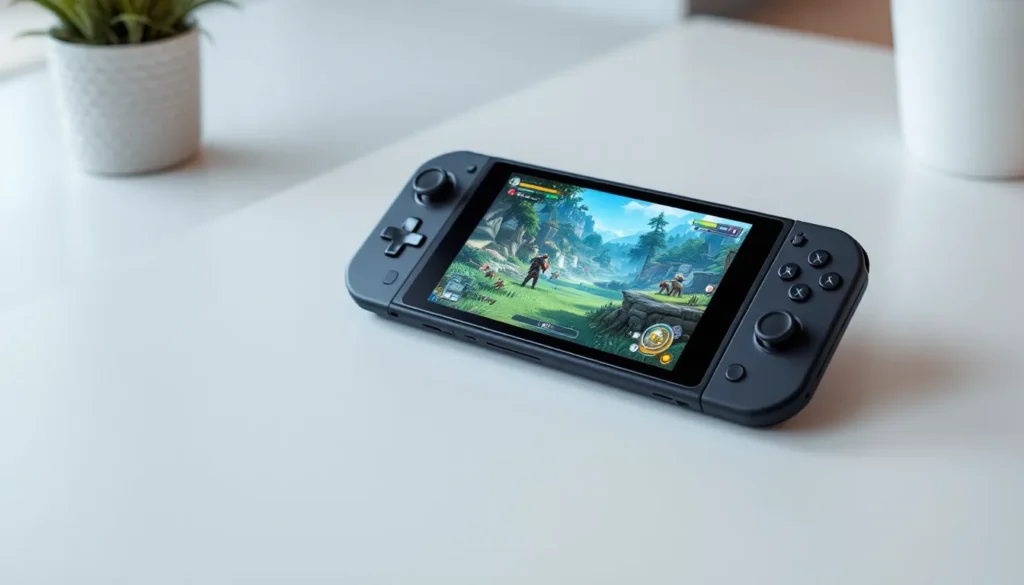
The Steam Deck is a portable gaming PC developed by Valve, not Lenovo, though confusion about the branding is common. It’s a standalone handheld device that runs SteamOS, Valve’s custom Linux-based operating system optimized for gaming. Unlike traditional handhelds locked to a closed ecosystem, the Steam Deck gives you access to your entire Steam library on a 7-inch screen you can hold in your hands.
What makes it revolutionary is the philosophy behind it: portable doesn’t have to mean compromised. The Steam Deck runs actual PC games at playable frame rates, not mobile ports or scaled-down versions. You get Elden Ring, Baldur’s Gate 3, Cyberpunk 2077, demanding AAA titles, running locally on hardware that weighs just over a pound. The device bridges the gap between the convenience of mobile gaming and the performance you’d expect from a gaming laptop.
This isn’t a Nintendo Switch competitor, even though they share the handheld form factor. The Steam Deck targets PC gamers specifically, offering flexibility, power, and an open ecosystem. Most users treat it as a complement to their main gaming setup, not a replacement. The ability to suspend games mid-session, switch between handheld and docked modes, and customize the entire software stack makes it uniquely appealing to enthusiasts who value control over convenience.
Key Features and Specifications
Display and Screen Technology
The Steam Deck sports a 7-inch IPS LCD touchscreen with a 1280×800 resolution. That 16:10 aspect ratio matches PC monitor standards, so games don’t get cropped or stretched awkwardly. The 400-nit brightness is solid for indoor use, though sunlight washout is noticeable if you’re gaming outside, that’s a real limitation to acknowledge.
Refresh rate caps at 60Hz, which feels conservative on paper but makes sense given power constraints. The touchscreen works with pressure sensitivity, useful for some games but rarely essential. What matters more is the large bezels housing the analog sticks and buttons, they’re positioned ergonomically, not cramped like some portables.
Processing Power and Performance
The Steam Deck uses an AMD APU (Accelerated Processing Unit) combining CPU and GPU on a single chip. Specifically, you get a Zen 2 architecture quad-core processor and RDNA GPU with 8 compute units. That’s roughly equivalent to PS5 or Xbox Series X hardware, albeit clocked lower for power efficiency.
Memory sits at 16GB LPDDR5, split between CPU and GPU. Storage varies by model: 64GB eMMC (slowest), 256GB NVMe (standard), or 512GB NVMe (most popular). Many users immediately replace the storage, the internal drive uses an M.2 slot, making upgrades straightforward if you’re comfortable opening the device. An Ultimate Steam Deck Teardown: Discover Internals, Upgrades, and Repair Insights breaks down the component layout if you’re considering hardware mods.
Throttle occurs under sustained heavy load, the device can’t maintain peak performance indefinitely without thermal limits kicking in. But for most games, especially single-player titles, you won’t notice it. Competitive shooters or demanding open-world games might require frame rate or resolution compromises.
Battery Life and Charging
The 50Wh battery delivers 2–8 hours depending on what you’re playing. Idle or 2D games? You’ll stretch toward 8 hours. Running Cyberpunk 2077 at high settings? Expect 2–3 hours. Most modern games land in the 3–5 hour range at balanced settings.
Charging uses USB-C with a 45W charger included. Top-up speed is reasonable, roughly 2 hours to full. The USB-C port doubles as your expansion pathway: external storage, docking stations, and power delivery all work through it. An official dock adds HDMI, USB ports, and improved thermal management when docked, transforming the device into a pseudo-desktop setup.
Game Library and Compatibility
Supported Platforms and Titles
The Steam Deck officially supports 70,000+ games from the Steam catalog. That’s not an exaggeration, the library is massive. Valve classifies games into three categories: Verified (optimized, runs perfectly out-of-box), Playable (works but might need tweaks), and Unsupported (won’t run or has major issues). Browse the Steam Deck Game Library: for detailed breakdowns of what’s actually optimized.
Verified titles are your safest bet. These include Hades, Stardew Valley, Baldur’s Gate 3, A Plague Tale: Innocence, and countless others. Playable games often run fine too, Valve’s conservative with their verification process. Unsupported games usually fail due to anti-cheat incompatibility (some multiplayer games block Linux systems for security reasons) or require Windows-specific dependencies.
Beyond Steam, you can sideload Windows onto a microSD card or external SSD, giving you access to Battle.net games, Epic Games, Xbox Game Pass, and GOG. Windows performance degrades compared to SteamOS, and thermals suffer, but it’s an option if you need specific titles. Most gamers stick with SteamOS and the 70,000+ compatible games, there’s genuinely enough to keep anyone busy.
Optimizing Games for Handheld Play
Not all Verified games run at the same frame rates. Some hit locked 60fps, others target 40fps for longer battery life. The Steam Deck’s Game Manager lets you configure per-game settings: resolution, refresh rate, TDP (thermal design power) limits, and FSR (FidelityFX Super Resolution) scaling.
FSR is crucial. This AMD upscaling tech renders games at lower resolutions then intelligently upscales to fill the screen, maintaining visual quality while boosting frame rate. Most Playable games become smooth with FSR enabled and some CPU/GPU tweaks. The learning curve is real, expect to spend 10–15 minutes per game tuning settings, but the flexibility is unmatched.
ProtonDB community ratings are your best friend. Users document settings that work for each game, so you’re rarely starting from scratch. The modding community has created tools that automate optimization for popular titles, removing guesswork from the process.
Design, Build Quality, and Ergonomics
Comfort During Extended Gaming Sessions
The Steam Deck’s grip is surprisingly good for a device this size. The controller layout mirrors Xbox (asymmetrical analog sticks, ABXY button arrangement), familiar to most gamers. Grip buttons on the back (configurable for any function) add depth without cluttering the front.
Weight distribution is balanced. At 1.47 pounds (670g), it’s heavier than a Switch but lighter than a gaming laptop. Holding it for 3+ hours doesn’t cause hand strain if you use the official carrying case, which supports the bottom and distributes load evenly.
Touchpads flank the bottom screen. They feel responsive for menus and cursor control in non-gamepad titles. Some find them essential for mouse-dependent games: others ignore them entirely. Haptic feedback (rumble) is surprisingly good and adds immersion to compatible games.
One caveat: the D-pad feels mushy compared to other handhelds, and the analog sticks can develop drift after heavy use (though Valve’s warranty covers this, and replacement sticks are inexpensive).
Durability and Materials
The plastic chassis is sturdy but not premium. It doesn’t feel cheap, but don’t expect metal construction or glass. The screen is Gorilla Glass with decent scratch resistance. The bezels protect the screen, which is thoughtful design.
Thermal management improved between revision 2022 and the 2024 OLED model (not called “Lenovo,” but we’re discussing the entire product line). The OLED version runs cooler and quieter, with a larger screen (8-inch). eMMC storage models degrade over time due to wear: NVMe models avoid this issue. Plan to replace storage if you go with the cheapest model and load it heavily.
Repair-friendliness is excellent. The community has detailed guides for every component: battery, fan, thumbstick, screen. Most repairs cost under $50 in parts. An Ultimate Steam Deck Teardown: Discover Internals, Upgrades, and Repair Insights gives you the complete breakdown before you commit to opening one.
Performance Benchmarks and Real-World Gaming
Frame Rates and Graphics Settings
Frame rates vary wildly depending on the game and your settings. Here’s the realistic breakdown:
High-performance titles (well-optimized indie games, older AAA games):
- Stardew Valley, Balatro: 60fps, minimal power draw, 6+ hours battery
- Hades: 60fps, medium power, 4–5 hours battery
- Portal 2: 60fps consistently, very light on resources
Modern AAA games (demanding, recent releases):
- Baldur’s Gate 3: 30fps on high, 40fps with tuning, 2–3 hours battery
- Cyberpunk 2077: 30fps at low-medium, some compromise required, 2 hours battery
- Elden Ring: 45–60fps with FSR, solid experience, 3–4 hours battery
Competitive titles (frame rate-sensitive):
- Dota 2: 60fps easy, moderate draw, 4 hours battery
- CS:GO: 60fps stable, 5+ hours battery (older engine helps)
- Valorant: 40–60fps depending on settings, 3–4 hours battery
The pattern: older games and indies run beautifully. 2023+ AAA games need setting adjustments but remain playable. The GPU isn’t cutting-edge anymore (it’s 2026), but smart optimization keeps most games at 40fps+.
Popular Games: How They Run
Baldur’s Gate 3 is the benchmark game everyone discusses. Native SteamOS runs it at 30–40fps on medium settings, fully playable but demanding tuning. Proton compatibility is flawless. The community has optimized settings down to exact FPS/battery targets, removing guesswork.
Cyberpunk 2077 improved significantly post-launch patches. The Steam Deck version handles it better than expected, 20–30fps at low settings, which is surprisingly stable for the complexity. Ray tracing? Forget it. But 1080p medium settings with FSR upscaling deliver a genuinely impressive handheld experience.
Elden Ring and Dark Souls III run exceptionally well. 60fps is achievable with minor settings tweaks. The absence of open-world draw distance loading makes performance predictable. Combat feels responsive at any frame rate, but 60fps definitely helps with timing.
Helldivers 2 and Palworld demonstrate online capability. Network performance is solid if your WiFi is decent. Frame rate prioritization helps multiplayer, you’ll sacrifice visuals to keep online games responsive.
Industry reviewers at PC Gamer and Tom’s Guide regularly benchmark new releases. By March 2026, the Steam Deck’s performance ceiling is well-established. Don’t expect 60fps max-settings gaming: expect 40–60fps at balanced or high settings across most games, with some outliers requiring compromise.
Pricing, Value, and Market Comparison
Cost Breakdown and Storage Options
As of 2026, Steam Deck pricing remains:
- 256GB NVMe: $399 USD (most popular, best value)
- 512GB NVMe: $549 USD (premium for storage, includes a case)
- OLED 512GB: $649 USD (newer revision, better screen, cooler operation)
The 64GB eMMC model is discontinued, good riddance, as it degraded rapidly. The 256GB NVMe is the sweet spot: enough storage for 8–12 AAA games, upgrade-friendly (you can add a larger drive), and reasonably priced.
Accessories add up. An official dock runs $89. A carrying case is $15–40. Screen protectors, grips, and replaceable stick modules are cheap ($10–20). Budget $500–650 for the device plus essentials.
Versus a gaming laptop ($800–1500), the Steam Deck is half the price for handheld portability. Versus a Nintendo Switch ($299), you pay more but get exponentially more power and library depth. The value proposition is strongest if you already own a Steam account with existing games, nothing to rebuy.
How It Stacks Up Against Competitors
Competition has emerged. The ROG Ally (ASUS), Legion Go (Lenovo, ironically), and upcoming devices from other manufacturers offer similar form factors. Here’s the reality:
ROG Ally: More powerful GPU (iGPU in Ryzen 7), runs Windows natively. But battery life suffers (1–2 hours under load), the software stack is clunky, and it costs more. Windows gaming on handheld remains suboptimal. Thermal management is worse than Steam Deck.
Legion Go: 8.8-inch screen, impressive specs, but software immaturity and price ($699) make it less compelling. The detachable controllers gimmick solves problems nobody had.
Nintendo Switch: Still viable for first-party exclusives (Zelda, Mario, Pokémon). But processing power gap is massive. If you care about modern AAA gaming, Switch can’t deliver.
The Steam Deck’s advantages:
- Matured software ecosystem (Proton, SteamOS)
- Largest game library of any handheld
- Most active modding and optimization community
- Best price-to-power ratio
- Open ecosystem (you can sideload anything)
Competitors match specs on paper, but Steam Deck’s maturity, community support, and software polish remain unmatched. The Steam Deck Dock: Unlock ecosystem has matured in ways new entrants can’t replicate overnight.
Software, Customization, and Modding
SteamOS and User Interface
SteamOS 3.x is Valve’s Linux-based OS optimized for handheld gaming. It’s not Windows, which confuses some users, but that’s intentional. Linux avoids bloat, runs efficiently on constrained hardware, and sidesteps licensing fees. The OS boots into Game Mode by default, a controller-friendly UI designed for living-room gaming.
Game Mode displays your library as large tiles, searchable and sortable. Install, launch, and manage games without touching a keyboard. The UI is fast, responsive, and genuinely intuitive. Controller navigation works perfectly: touchscreen support exists but isn’t necessary.
Desktop Mode unlocks the full Linux experience. Switch to it and you’ve got a traditional desktop environment with a file manager, terminal, and app launcher. Here, you can sideload non-Steam games, install mods, configure emulators, and tinker endlessly. Most users never need Desktop Mode unless they’re modding or running unsupported software.
Proton, Valve’s compatibility layer, translates DirectX game calls to Vulkan, enabling Windows games to run on Linux. Compatibility rates are absurdly high, 95%+ of games work with minimal effort. Exploring the Steam Deck details the technical underpinnings.
Community Mods and Enhancements
The modding community is the Steam Deck’s secret weapon. Tools like ProtonTricks, Lutris, and EmuDeck extend the device far beyond Valve’s intended scope.
EmuDeck is the kingpin. This community-built tool automatically configures emulators (RetroArch, Dolphin, PCSX2, etc.) for nearly every console generation. Install it and suddenly your Steam Deck runs NES, SNES, Genesis, N64, GameCube, PS1, PS2, Dreamcast, the entire retro library. An Steam Deck RetroArch: Unlock Endless Retro Gaming Adventures Today dives into classic game setup.
UI overhauls let you customize Game Mode’s appearance: custom themes, wallpapers, and layout tweaks. CSS Loader and similar tools let you modify SteamOS styling without installing anything system-threatening.
Plugin systems like Decky Loader add functionality: achievement tracking, custom shortcut managers, Discord integration, and performance overlays. These don’t require Desktop Mode access, they work within Game Mode, keeping the experience seamless.
The modding community’s strength: it’s non-destructive. Worst case, you reinstall SteamOS and lose nothing. Best case, you unlock capabilities Valve didn’t officially enable but technically allow. This open philosophy distinguishes Steam Deck from competitors with locked-down ecosystems.
Accessories and Expandability
The Steam Deck’s ecosystem has matured significantly. Here’s what actually matters:
Official Dock ($89): Adds HDMI output, USB-A ports, and improved cooling when docked. It’s overpriced but genuinely useful if you want living-room gaming. Third-party docks exist at $30–50, though they lack official thermal optimization.
Storage Expansion: The M.2 slot accepts standard 2230 NVMe drives. A 2TB drive costs $40–60 and quadruples your storage. Installation takes 5 minutes. Some users stack multiple microSD cards externally, but internal SSD is faster and cleaner.
Carrying Cases: The official case ($15) is basic but protective. Premium third-party cases from brands like Satisfye offer better ergonomics and cable storage at $30–50.
Grip Modules and Thumb Stick Replacements: Analog drift is fixable with $15–20 replacement sticks. Grip modules add comfort without bulk. Both are user-replaceable, no tools needed.
Screen Protectors: Gorilla Glass is tough, but tempered glass protectors are cheap insurance if you transport the device frequently.
Controllers and Stands: Bluetooth controllers work for when the built-in controls feel cramped. Portable stands ($15–30) prop the device at comfortable angles for extended sessions.
The expandability story: Steam Deck was designed for hobbyists. Unlike competitors, opening it doesn’t void warranty (though official repairs become unavailable). Replacement parts are cheap and plentiful. After four years, the community has mapped every component, repair procedure, and upgrade path. A Steam Deck Dock: Unlock shows how external hardware unlocks home gaming potential.
Pros and Cons: Is It Right for You?
Best For
Commuters and travelers: If you spend 2+ hours daily traveling and want to game, Steam Deck is perfect. The battery handles most games for commute length, and the form factor beats gaming laptops by miles.
PC gamers with existing Steam libraries: You already own the games. No rebuy, no DRM issues. Just bring your library anywhere.
Modders and tinkerers: Desktop Mode, Proton, and community tools unlock endless possibilities. If you enjoy tweaking settings and optimizing performance, you’ll love the flexibility.
Retro gaming enthusiasts: EmuDeck makes this the ultimate retro handheld. Thousands of classic games in your pocket.
Budget-conscious gamers: $400 for a portable gaming device with 70,000+ compatible games is unbeatable value compared to gaming laptops or high-end phones.
Always-online players: If you use Game Pass or Epic Games, sideloading Windows handles it. The Steam Deck adapts to your library.
Not Ideal For
Console-exclusive gamers: No God of War, Halo, Forza natively. Windows sideloading helps, but don’t buy a Steam Deck expecting exclusive console gaming.
Competitive esports players: 30–40fps is fine for most games, but framerate-hungry shooters (Apex Legends, Valorant at competitive settings) might not feel snappy enough if you’re used to 144fps on a desktop.
Casual Nintendo fans: If you only play Mario, Pokémon, and Animal Crossing, a Switch makes more sense. The libraries don’t overlap.
People who hate tweaking settings: Some games need per-title optimization. If you want a device that “just works” with every game, you’ll be frustrated. Not every title is Verified.
Multiplayer purists: Anti-cheat games block Linux. Call of Duty, Fortnite, PUBG won’t launch on SteamOS. Windows sideload helps but adds friction.
Battery life addicts: Expect 2–4 hours under realistic load. If you need 8+ hours, a Switch or phone is better. Portable chargers help, but that’s extra gear.
People who want cutting-edge graphics: This is a 4-year-old APU. It won’t max 2026’s demanding AAA games at high settings. Balanced compromises are necessary.
Conclusion
The Steam Deck remains the best handheld gaming device for PC gamers in 2026, not because it’s perfect, but because it’s the most honest portable gaming experience available. It doesn’t pretend to offer PS5-level graphics in a 7-inch form factor. It doesn’t lock you into a curated ecosystem. It gives you power, flexibility, and access to an enormous library, accepting the trade-offs required to fit all that into something you can hold in one hand.
Competitors have arrived, and some match specs on paper. But the Steam Deck’s software maturity, community support, and open ecosystem remain unmatched. After four years, Valve stopped innovating hardware specs and instead let the community carry the torch. That philosophy, empowering users rather than constraining them, is why the Steam Deck has staying power.
Buy one if you travel frequently, already own a Steam library, or want a handheld that respects your ownership and tinkering instincts. Skip it if you demand locked-down simplicity, console exclusives, or always-on connectivity without compromise. For everyone else, the Steam Deck isn’t just a handheld gaming device, it’s a philosophy about what gaming hardware should be. At $400, that philosophy is worth experiencing.